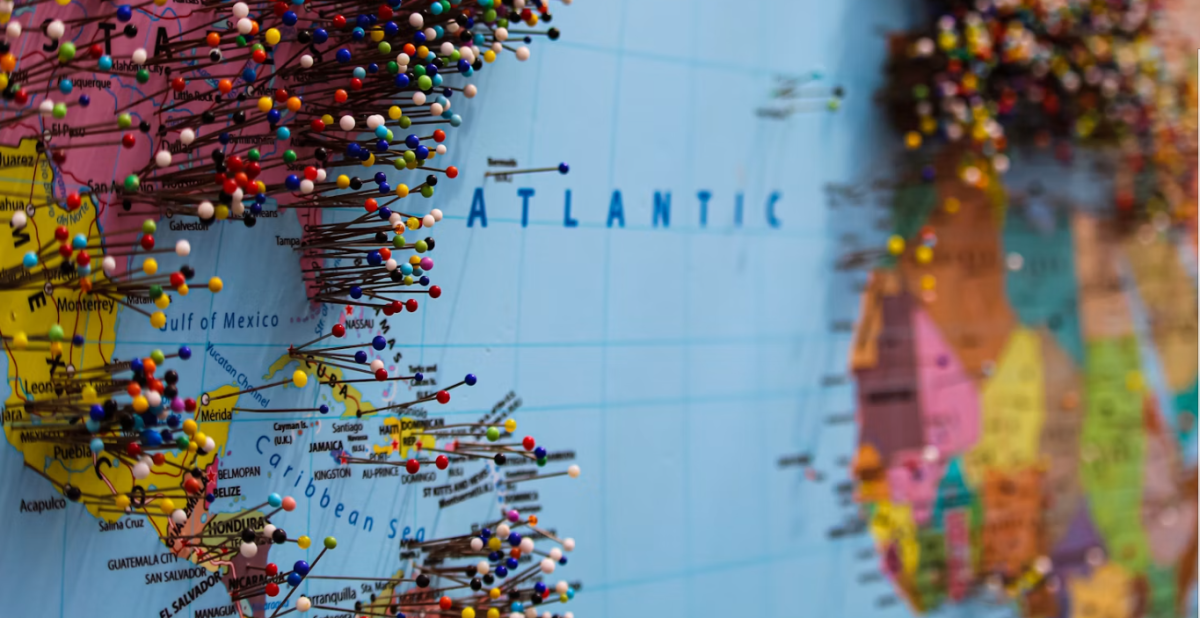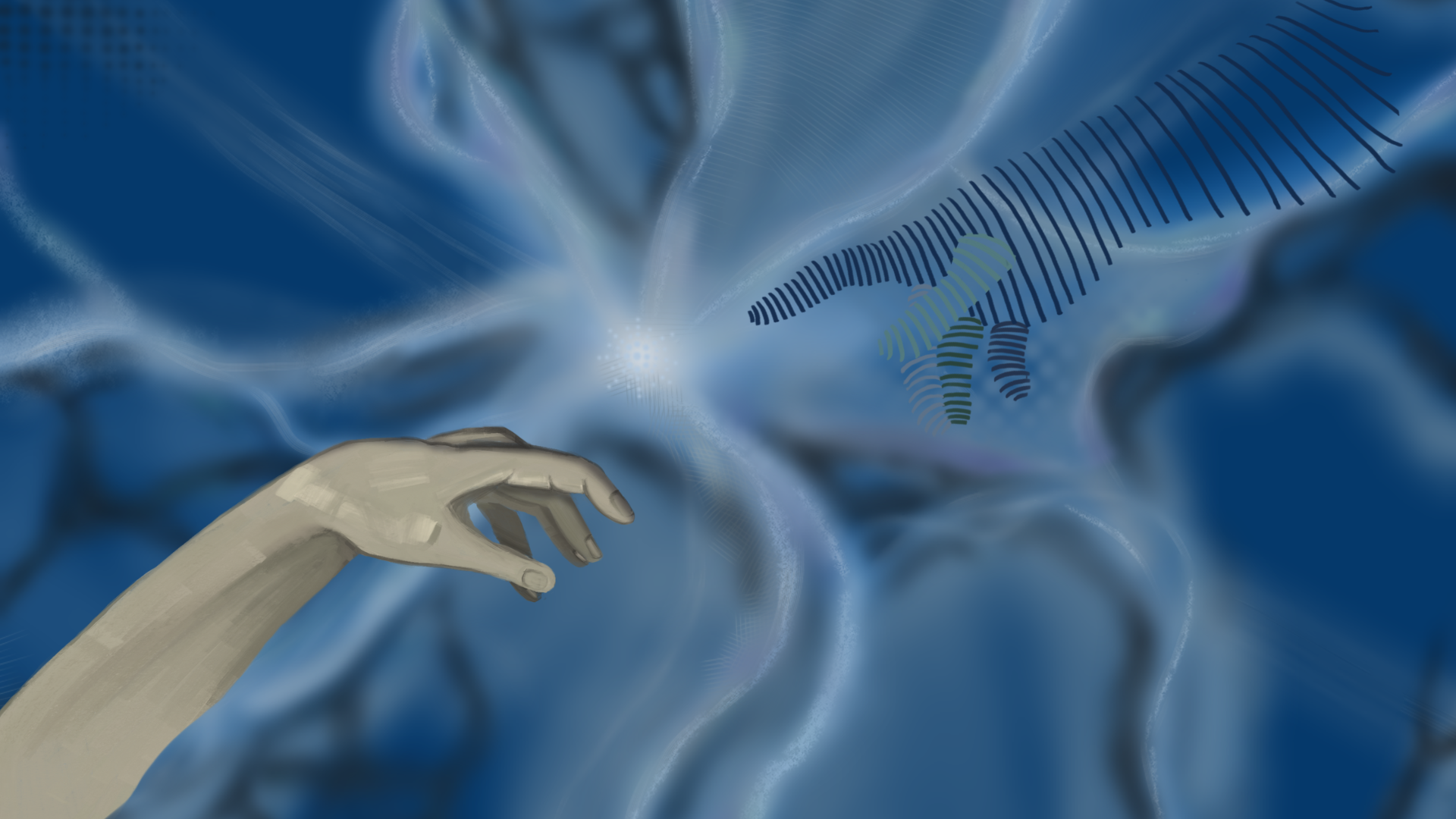
The ancient Greeks told many myths and tales to explain natural phenomena and moral dilemmas. The seasons being caused by the goddess Persephone being away from her mother and relocated to the underworld to be with her husband; earthquakes being caused by the god poseidon striking his trident against the ground; and all of the evil and hardships in the world being caused by a woman named Pandora opening a box. A box full of both dangers and hope. A box full of complete unknowns. A box that was never meant to be opened.
“AI is a Pandora’s Box, which we have opened, that is full of dangers that we do not yet understand, but now it is released into the world, and those things cannot go back into the box, and we kind of unleash something we don’t understand.”
History teacher Genavive Winchell said.
Though Artificial Intelligence (AI) has gained popularity in recent years, AI itself is nothing new. Being invented in the 1950s as a way to study and simulate human intelligence, it has slowly but slowly embedded itself into our modern society. AI is in the algorithms of social media; in the cookies of websites; in siri, alexa, echo, and google assistants; in the GPS on google and apple maps. AI has been released and weaved into our world, like the contents of Pandora’s box. And it is evident in both the use at home, and at school.
AI Use in School
In the wake of the 4th industrial revolution, AI is a resource that has become available to both teachers and students alike. With one picture, one prompt, one question, artificial intelligence can answer an entire assignment in seconds. Chat GPT, Snap Ai, Groath, Gemini, and so much more are just clicks away from internet users. Freshman Elsie Wells chooses not to use AI when it comes to her schooling, but she does notice its use by her classmates around her. “A lot of kids around me are using it for answers on homework.” Wells said. On the rare occasion that she does use AI, Wells chooses to use resources like snap AI as a tool to help with comprehension. “It can help with summarizing things if I need to summarize something for an assignment. School wise or otherwise.”
Student use of AI for assignments is not something that goes unnoticed by both the students and teachers at West Albany. Math teacher Alison Bryant has noticed frequent use of both Chat-GPT and Photo Math. The work of students who used these applications were noticeable enough for her to spot the fakes.“It [Photo Math] was really clunky and not very good at context… And so it’s always very obvious when kids use it.”
Bryant feels as if AI should not be used in education in any context. She sees the danger in AI, and how it discourages the need to find out why instead of just the answer. “The path of finding an answer and asking questions and persisting and continuing to find information is really important.” Bryant said.
She believes that this skill is vital not only to math, but also life in general. And it starts in the classroom.
“We need to teach students how to think critically for themselves, and not necessarily get the fastest answer.”
AI Use at Home
The use of AI isn’t just confined to the classroom. It can be found in the for you pages of social media users. “I’ve seen like people making [fake] videos of celebrities.” Wells said. These videos are deceptive, and are realistic enough to trick the viewers. “[They create] really crazy stuff that sometimes I can’t [even] tell if it’s real or not.”
The AI images on social media platforms have evolved drastically over the past few years. Senior Mahmoud Rashid noticed that the change of AI was very drastic in a short period of time.. “I mean, just two years ago, you’d see those videos of like Will Smith eating spaghetti, and it’s very muddy and very choppy and it’s very obvious as AI.” Rashid said. “Now we’re at a point where people can generate AI videos where sometimes it’s hard to tell whether it’s AI or not.”
Where the Line is Drawn
The hole that Artificial Intelligence has on the modern world comes with ups and downs. Winchell believes that AI is a powerful tool that can open up windows and opportunities for people. “[It] could be used to reduce human labor in ways that open up humans to create art and do things that they’re passionate about.” Winchell said. “It [AI] also can be a tool for skills that not all people have.”
But to Winchell, there are some dangers to AI as well. She believes iit can be used for violence, like the first AI cyber attack on antrophic. And it could also be damaging to cultures and human interactions. “As people who are isolated, might and seem to be, turning to AI for friendship and companionship instead of turning towards humans in their community.”
To Rashid, AI has overstepped and become something that is no longer beneficial. He believes that the reliance on artificial intelligence has caused a lack in critical thinking. “The reliance on AI is kind of devolving us to that ‘elementary level’ way of thinking.” Rashid said.
“I think we should have just stopped AI where it was something that could just be used for research purposes and clarity as a tool.