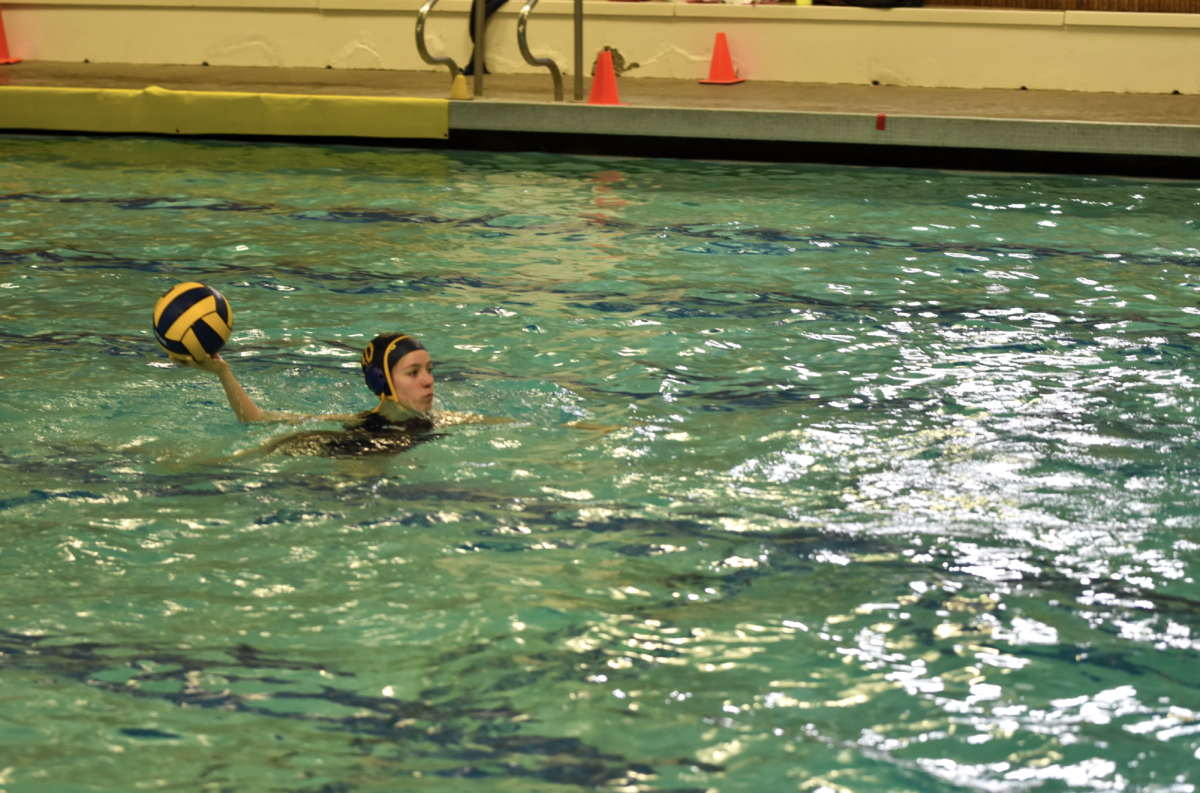
Last season, the girls’ water polo team had nine players. This year, they had six. Seven are needed to play. So how were they able to compete? And why have the team seen fewer and fewer people join every year, even when they consistently perform well in the playoffs?
The immediate issue stems from the fact that seniors from last year graduated, naturally leaving the team with less players. Most of the time, the loss of seniors is offset by the addition of freshmen joining the team, making the number of people per year relatively equal. However, girls’ water polo doesn’t have recruits willing to commit to the team. “There is a shortage of girls in water polo across the whole state. Water Polo has decreased significantly since COVID. Programs are having a hard time coming back due to lack of funding, lack of kids, starting at [age] fourteen, and people not wanting to get into the sport, thinking it’s dangerous or challenging,” water polo coach Bailey Dickerson said.
Because the team only had six players, they couldn’t have their own team. They had to work around that and had to be co-ed with the boys’ JV team. That includes having fewer reps in games since they have to share the team and no playoff opportunities.
Since COVID shut down many things, including public pools, people who might have taken an interest in swimming via lessons or club sports didn’t have the chance. Making a huge impact on aquatic sports across the country, and in the state of Oregon. “Our recruiters retired during COVID, so we haven’t gotten a lot of people who already know how to play water polo come in,” sophomore Jane Hurst, who plays water polo said. This leads to most of the recruitment for water polo coming from word of mouth. Players talking to their friends, eighth-grade recruitment nights, and convincing members of the swim team to join.
A combination of different factors brought on by COVID has led to the stagnation of aquatic sports across the state, hitting our community hard by directly impacting our athletic programs. Dickerson notes that water polo is still accessible to many people, even those who aren’t natural swimmers. “When he [Colton Luke] came in as a freshman, he couldn’t swim, and he just came out of the state tournament as a first team in the state,” Dickerson said. “You can join as long as you can be safe in the water, and [if] I’m not worried about you drowning.”
![The girls varsity basketball team runs together to celebrate their victory in the state championship at Linfield University, Mar. 14. This was the first state champion title the team had won in all of West Albany High School history. "Having the community show up [to] our games has been so awesome," junior Payton Starwalt said.](https://wahswhirlwind.com/wp-content/uploads/2026/04/Screenshot-1200x708.png)