“Measles virus detected in Corvallis wastewater” and “New measles cases in Oregon” are both some of the local headlines that you may have seen recently. The topic of measles may have been something you have heard about as of late. In 2025, there had been only one confirmed case of measles in the entire state of Oregon. But with only five weeks into the new year, there have already been five confirmed cases of measles, according to an article by KTVZ12. The rise of measles cases has not just been seen in Oregon, but has also been seen on a national scale.
According to charts released by the Centers for Disease Control and Prevention (CDC), there were 2,280 confirmed cases of measles in the United States in 2025— the highest number of confirmed cases since 1991, with 9,643 confirmed cases that year. Out of the 2,280 cases of measles, 11% were hospitalized, with the total number of deaths being three. As of February 2026, there are 910 confirmed cases of measles in the nation, with 3% already being hospitalized.
With all of this information, there might be questions like ¨what measles are, and how do I prevent them?¨
Measles is a highly contagious airborne disease that is most commonly found in children. Measles symptoms consist of fever, coughing, runny nose, and red watery eyes, with a red or purple/brown rash spreading from head to toe. Children, adults over 20, and pregnant women are more likely to develop other complications such as ear infection, pneumonia, and encephalitis (brain swelling).
Airborne diseases are normally transmitted through small respiratory droplets. These are spread when the contagious sneezes, coughs, languages, or doses of any kind of exhale, according to the article “What Are Airborne Diseases?” by WebMD. Diseases also linger in the air. This means if the person in a room before you is infected, the air in the room could still be dangerous.
Measles can survive airborne for up to two hours after someone infected leaves an area, according to Benton County’s Health Center and nursing services, by Rachel Smith. Measles also has a 90% infection rate, meaning up to 9 out of 10 unvaccinated people who make contact with an infected person will contract measles, according to an article by Johns Hopkins Medicine. While measles is most commonly contracted by children, anyone who is unvaccinated can still contract the disease.
Smith shares that the most effective way to prevent measles is getting the vaccine. The first dose of vaccines is given to children around the one-year mark, and the second one is normally given to children from ages four to six years old. The first dose has a 93% effectiveness rate, and the second one has a 97% effectiveness rate, according to Smith. Smith also shared that communities
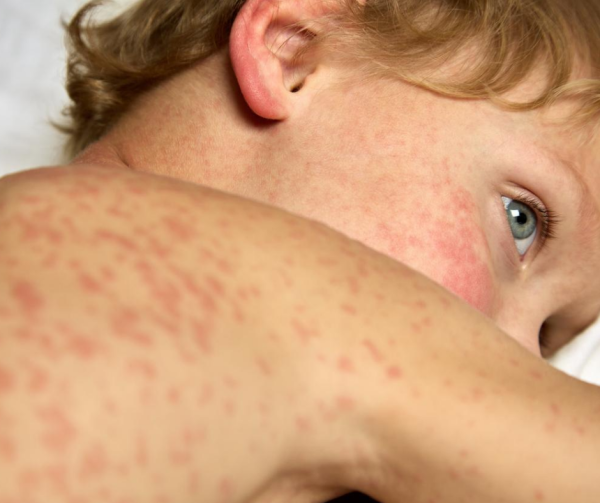
need up to a 95% vaccination rate to achieve immunity from measles, with Oregon having a 93% vaccine rate, and Benton County only having a vaccination rate of 90%.
If you have been exposed to measles, then there are steps you can take, according to the CDC. First, you should determine if you are immune, based on your vaccination status, as well as your age. Second, make a special arrangement to get evaluated, as you don’t want to put the public or health care providers at risk. “If you have measles, the best thing you can do is to stay home and contact your health provider,” says Smith. The CDC also says you should cover your mouth when you cough, sneeze, or exhale of any kind. You should make sure to wash your hands constantly with soap and water. Avoid sharing any kind of food or drink. Make sure to disinfect things such as tables, door knobs, counters, and other frequently touched surfaces.
Smith also warns that this is just the beginning, with more measles cases to come going into the rest of 2026. “We are on track to [have] a pretty intense measles year,” Smith said.