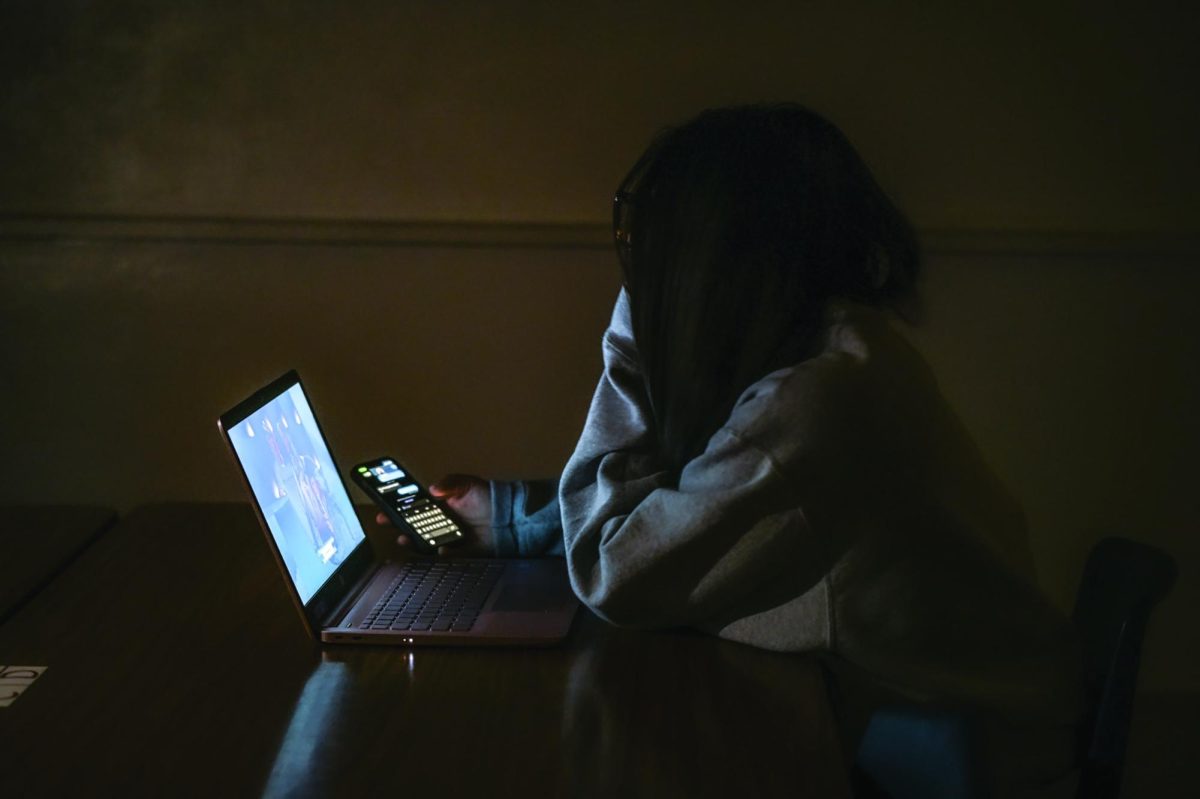
Theaters go dark, the opening scene begins, and small rectangles of light glow throughout the audience. In living rooms, a movie streams on a large screen while thumbs scroll across phones. A dramatic moment unfolds, but eyes drift downward to messages and social media feeds.
Watching a movie no longer always means giving it our full attention. From packed cinemas to quiet bedrooms, screens now compete with other screens. Phones buzz during crucial scenes. Group chats continue while plots twist. Even at home, viewers often split their focus, half on the story, half on the device in their hands.
As technology offers constant connection, it also reshapes the way audiences experience film. The question is no longer just where we watch movies, in theaters, at home, or online, but whether we are truly watching at all.
“I saw an interview with Matt Damon and Ben Affleck talking about writing movies… and how you have the characters say the meaning of the movie so many times because the attention spans are low, or people are on their phones, so they forget those key plot points,” said English teacher Chris Martin.
There are those scriptwriters and directors who aim to create films that are seminal pieces of art, but feel pressure to adjust their writing around “lazy consumers,” ensuring audiences can still understand the message even while distracted by their phones.
“No one can pay attention to anything. Long form storytelling is one of the most important things we have,” said English teacher Arden Hanna. “[It] is how we build understanding of the world around us and different perspectives.”
Yet the issue extends beyond filmmakers adjusting their scripts. The real shift may be happening within audiences themselves. As constant notifications and endless scrolling become habits, the ability to sit with a story, to follow its slow build, its subtle turns, its quiet moments, begins to weaken. What is lost is not just clarity in plot, but its deeper connection that long, uninterrupted storytelling is supposed to tell.
“[Being able to pause and rewind] is definitely going to deplete some concentration. It’s like reading a book,” said Martin. “If you read it in 100 small sittings, it is harder to weave that whole story together, versus just grinding it out in one viewing or reading.”
This change in viewing reflects something larger than entertainment. Film, in any form, requires patience and immersion to fully understand its themes and emotional depth. Without their commitment, the subtle character development, layered symbolism, and gradual tension lose their impact. The concern, then, is not simply about missing plot points, but about what happens to critical thinking and empathy when long-term storytelling is no longer experienced as it was intended.
“On TikTok, there [will be] a movie, and then there’s Subway Surfers. I think it totally takes away from it,” said Hanna. “My main takeaway from this is that people need to be intentional about the art they consume. It’s just consumer culture at that point, like actually experiencing what the artists wanted you to experience.”
The issue is not simply about distraction; it is about choice. Audiences are not forced to split their focus; they have grown accustomed to it. The constant second screens have normalized divided attention, making it natural rather than disruptive. As a result, the conversation shifts from what technology does to viewers to what viewers allow technology to do to their experience of art.
“[Using my phone] is almost muscle memory. I’m sitting on the couch, I have my phone in my hand, something’s on the screen,” said Martin. “If I’m not doing all three of those things, sitting on the couch, phone in my hand, watching the movie, I feel like something’s off sometimes.”