Disclaimer: This may contain some spoilers for Heated Rivalry.
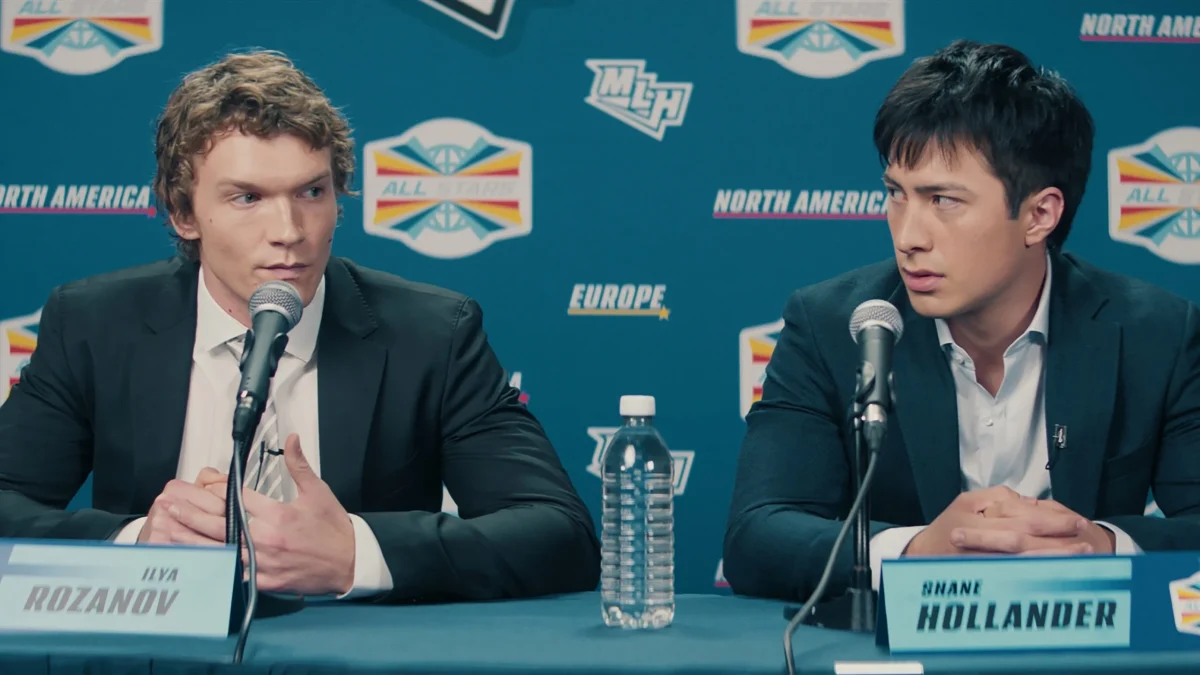
“Heated Rivalry”, a Canadian queer romance TV series based on the novel series “Game Changers” by Rachel Reid, was released on HBO Max in the United States. With a minimal budget of about $3.6 million per episode, an absence of A-list celebrities, and less than two months of filming, its global popularity was reportedly not anticipated by the show’s TV executives, according to the New York Times.
Meanwhile, I also found myself stumped regarding a completely different question: “Why do people like ‘Heated Rivalry,’ let alone Men Love Men (MLM) as a whole?” Regardless of whether I watched the series, I would have known what the answer would have been for me.
Now, although I can’t explain the appeal of the show’s more steamy scenes, I can say that “Heated Rivalry,” similar to other popular MLM ships, captures emotional intimacy in ways that most mainstream fictional couples tend to miss.
From my observations, fictional couples (particularly heterosexual ones) tend to have one partner who consistently supports the other one. The character being emotionally supported is usually written as “emotionally fragile,” while the other character, traditionally male, is applauded for being stoic. On the surface, there appears to be nothing harmful about this relationship portrayal.
But in reality, this dynamic also undermines the truth that men can also be affected by their mental health. Depression doesn’t discriminate, and experiencing anxiety isn’t a personal failing. These are the messages that often feel one-sided and overlooked among fictional men in heterosexual relationships. As a result, these traditional boundaries may become tiring for people who want a change— ships that allow both partners to be emotionally supported.

On the other hand, this is where “Heated Rivalry” and other queer MLM romance nails its depiction of relationships. For instance, as the series progressed, both of the main characters were able to not only express their feelings and communicate openly, but also reach out to comfort each other. Their relationship evolves beyond physical attraction as they begin respecting each other as individuals. Their physical intimacy transforms into something more tender: a way to remind each other that they’re safe and loved.
Another strength of “Heated Rivalry’s” portrayal of romance is its depiction of toxic masculinity.
Ilya’s family plot line was substantial in conveying how his father and brother’s consistent, emotionally demanding pressure on him resulted in his internalized perception that he’s “lazy.” While Ilya’s rejection of Shane’s attempts to reach out to him appears callous on a first watch, it becomes more impactful in hindsight upon reflection. Ilya’s dismissal could be an imitation of his own family’s dismissal of his emotions, his attempt to process his father’s and brother’s emotional abuse, or a combination of both. Shane’s patient support ultimately granted Ilya the safe space he didn’t have with his family.
Likewise, the exploration of Russia’s cultural differences with the United States was an enlightening comparison of how different countries treat queer people. Ilya’s confession scene captured his fear of being persecuted in Russia, where homophobia is more prominent than in the United States. His decision to pursue his relationship with Shane by sacrificing his livelihood in Russia shows his commitment to a happy life with the man he loves.

Similarly, Shane’s gradual acceptance that he’s gay despite being in a welcoming community reveals a narrative that emotional intimacy and authenticity are a personal reckoning. Despite his supportive family and living in a country more accepting of being gay, he was still plagued by the doubt that he was the problem before coming out.
However, his plans to live the rest of his future with Ilya and the support of his parents showed how he’s come to terms with who he is while playing in a traditionally masculine sport.
Yet it’s the conclusion of season one with episode six (“The Cottage”) that captures why some people like MLM: it’s warm, heartfelt, and two people can be vulnerable without being mocked for it.
As much as it was a slow burn for Shane and Ilya to fall in love, it was also an emotional slow burn for individuals cautious about mainstream media’s portrayal of queer romance to feel solace that Ilya and Shane found each other.
Source:
Popularity of ‘Heated Rivalry’ Has Surprised Even TV Executives – The New York Times