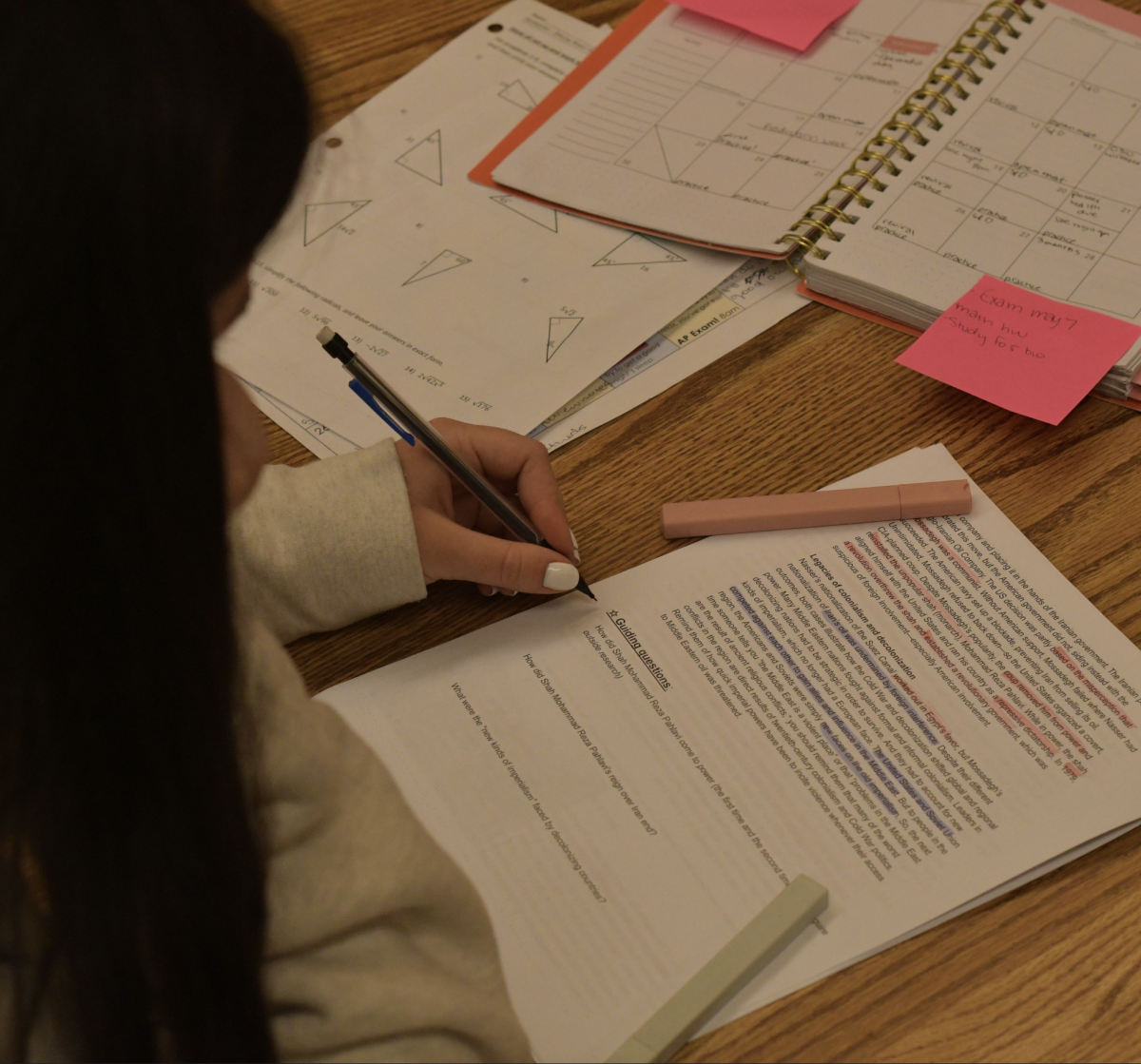
Many students today ask their friends or teachers for the answer to a question; they expect them to give it straight away, not wonder why the answer is the way it is. They simply want to finish their worksheet and turn it in. This small movement is much bigger than it seems.
According to the Manhattan Institute, in 2009, public reading scored a five, whereas in 2024 it scored -3.5. We understand the new wave of technology; most people want to be online, scrolling through social media for hours until they realize it’s three am on a school night. So they go to school the next morning, unable to solve the questions given to them by their teachers. It is physically clear that, as students, we are losing our ability to focus, learn, and develop a clear line of reasoning.
Kelli Backer, a teacher and coach at West Albany High School, explained that nowadays, students are quiet and just simply want the answer to everything. Back then, she would have students who would be fixated on why something was the way it was. There is a term called cognitive offloading, which refers to the act of reducing the mental processing requirements of a task through physical actions like scrolling on social media. It means people relying on something else to think for themselves, implying the fact that because most students have full access to information, whether it comes from their phone or school library, it reduces the need to store knowledge and problem solve, and how classrooms have switched from discussion-based to answer-based.
In the 90s, a large number of 13-year-old students would read for fun regularly. In 2023, only 14% of 13-year-olds read for fun, according to Federal Data on Reading for Pleasure: All Signs Show a Slump by Sunil Iyengar. Studies show that reading and writing are key components of problem-solving and making connections. In 2025, the main way people write is texting. With new slang developing every day, the writing in texts has become less and less to the point, becoming illiterate in most teens.
It has become such a problem in the world that some countries, such as Sweden, have completely switched back to previous learning strategies, such as only textbooks, and restricted laptop usage for students, trying to revert themselves back to a book-based learning system.
Critical thinking isn’t only about writing, school, or grades, but it’s about how people navigate themselves around their life and the world. There is misinformation being spread everywhere; it’s online, on posters, in the news, etc. With a lack of critical thinking skills, people are unable to tell the truth from false information. This can cause problems like false news and scientific facts.
While we only scratch the surface of the topic, it is much more of a problem than we think it is. To try to restore the problem of the decline of critical thinking and problem-solving, we must first acknowledge the fact that it is a problem, and then we can act to fix it. Because it’s not going to disappear overnight, it´s something that will take time to restore. If we continue to trade our learning for fast-paced and forgetful media, then we lose meaningful lessons that teach us who we are and how we see each other.